Almost every tract home built in Tucson over the last several decades sits on a concrete slab, with the water supply lines running through or beneath it. That construction is fast, economical, and well suited to our soil. It also means that when a supply line under the slab starts leaking, the water has nowhere obvious to go and nothing visible to announce it.
A slab leak can run for months. By the time most homeowners notice, they’ve paid for thousands of gallons they never used. The good news is that a slab leak leaves a fairly consistent trail of clues, and once you know what they are, they’re hard to miss.
Why Slab Leaks Happen in Tucson Homes
A few local factors stack up here.
Soil movement is the first. Our ground expands and contracts with moisture, and caliche layers don’t shift evenly. Over years, that movement puts stress on rigid pipe at exactly the points where it’s least able to flex.
Water chemistry is the second. Hard water leaves mineral scale inside supply lines, and scale creates turbulence. Turbulence wears at the pipe wall from the inside, particularly at elbows and joints where the flow direction changes.
Age is the third. Homes built before copper became standard, and even early copper installations, are now decades into service. Pinhole leaks in copper are common enough here that they’re rarely a surprise.
None of this means your slab is a ticking clock. It means slab leaks are a normal part of homeownership in this region and worth knowing how to spot.
The Warning Signs Worth Acting On
Any one of these on its own might be something else. Two or three together are worth a call.
- A water bill that climbs without an explanation. This is the most common first signal, and it’s often dismissed as a rate change or a heavy watering month.
- A warm spot on the floor. If the leak is on the hot side, heat radiates up through tile or concrete. You’ll usually notice it barefoot before you notice it any other way.
- The sound of running water when everything is off. Stand in a quiet house at night. A faint continuous hiss or rush that doesn’t stop is worth investigating.
- Water pressure that’s dropped across the whole house. Not one fixture. All of them.
- Cracks appearing in flooring, drywall, or the slab itself. Water under a foundation moves soil, and moving soil moves everything above it.
- Damp carpet, warped flooring, or a musty smell with no visible source. Moisture wicking up through the slab shows itself at the surface eventually.
- Mold or mildew where there’s no plumbing fixture nearby. Water travels along the path the slab gives it, so the leak is rarely directly beneath the damp spot.
The Meter Test You Can Run Yourself
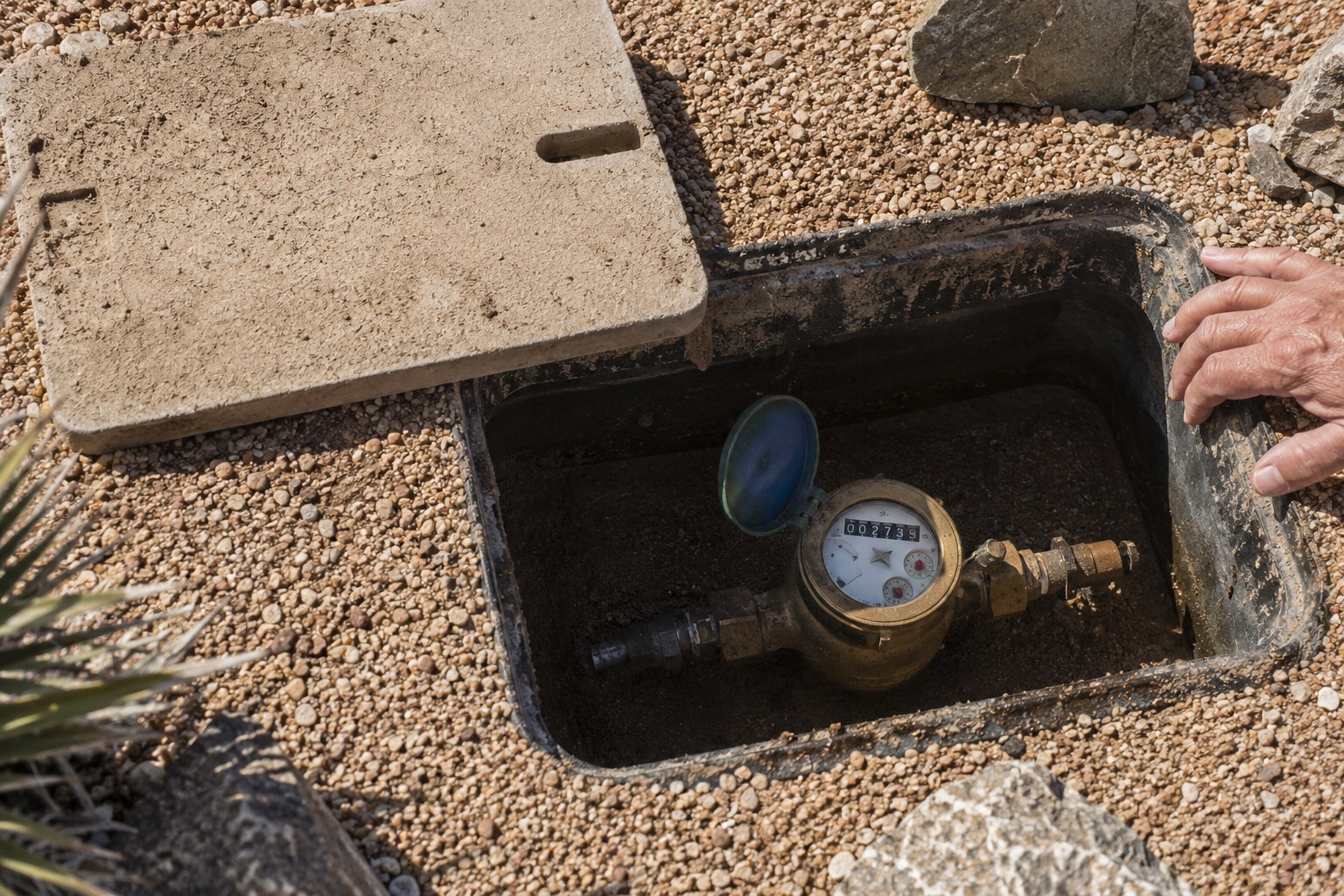
There’s a simple check that tells you whether water is moving through your system when it shouldn’t be, and it costs nothing.
- Turn off every fixture and appliance that uses water, including the ice maker and any irrigation controller.
- Find your water meter, usually near the street in a covered box.
- Note the position of the low-flow indicator, which is often a small triangle or dial that spins with even minimal flow.
- Wait fifteen to thirty minutes without using any water, then check it again.
If the indicator has moved, water is going somewhere. That doesn’t confirm a slab leak specifically, since it could be an irrigation line, a toilet flapper, or a hose bib. It does confirm you have a leak, and that’s the point where guessing stops being useful.
How We Find a Slab Leak Without Tearing Up Your Floor
This is the part that worries homeowners most, and it shouldn’t. Locating a slab leak is a diagnostic process, not a demolition one.
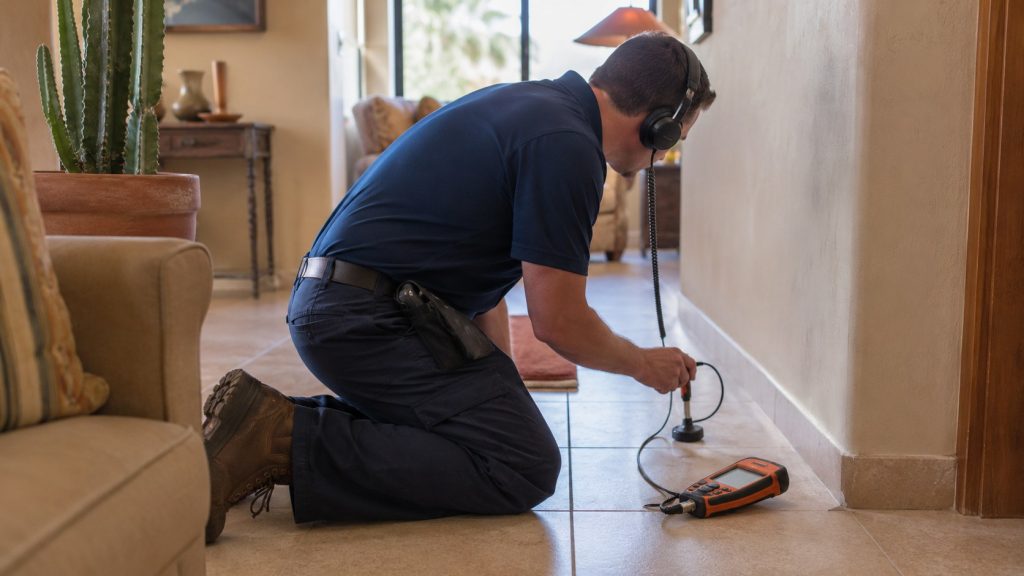
We start with acoustic listening equipment, which picks up the specific sound signature of pressurized water escaping a pipe and lets us trace it through concrete. We isolate sections of the system to narrow down whether the leak is on the hot side or the cold side. Where it helps, we use thermal imaging to map temperature differences across the slab, and pressure testing to confirm which line is losing water.
By the time anything gets opened, we know where the leak is within a small area. The goal is one precise access point rather than exploratory work across a room.
Your Repair Options
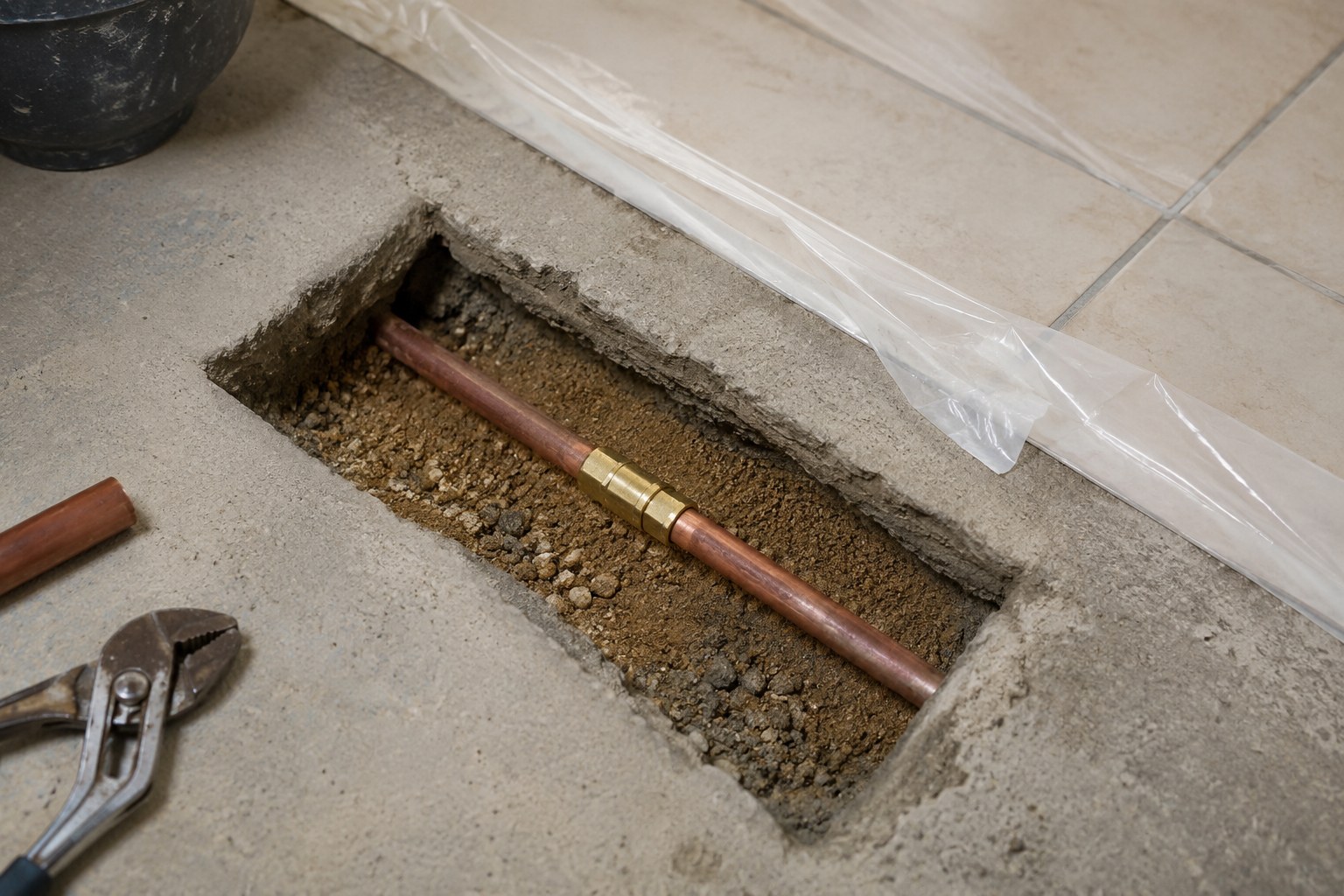
Once we’ve located the leak, there are generally three ways forward, and the right one depends on the age and condition of the rest of the system.
A spot repair opens the slab at the leak, repairs that section, and closes it back up. It’s the least invasive and the least expensive, and it’s the right answer when the rest of the piping is in good condition and this is an isolated failure.
A reroute abandons the failed section under the slab and runs a new line through the walls or attic instead. It avoids opening the floor and takes that section of pipe out of the ground permanently. This often makes sense when the leak is in a difficult location.
A repipe replaces the supply system throughout. This is the right call when a home has had multiple leaks, when the piping material is at the end of its service life, or when spot-repairing has started to feel like a subscription. Our pipe repair and replacement service covers all three, and we’ll be straight with you about which one your house actually needs.
We’d rather tell you a spot repair will hold than sell you a repipe you don’t need. We’d also rather tell you that the third leak in two years is a pattern, not bad luck.
Common Questions About Slab Leaks
Will homeowners insurance cover a slab leak?
Policies vary considerably. Many cover the resulting water damage and the cost of accessing the pipe while excluding the pipe repair itself. Read your policy or call your agent, and document everything from the start.
How urgent is it?
A slab leak doesn’t usually flood a house overnight, but it wastes water continuously and undermines soil under the foundation the entire time it runs. It’s not a same-night emergency in most cases, and it’s also not something to sit on for a season.
Can I just shut off the water until I decide?
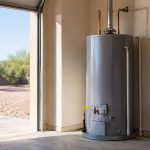
You can, and if the leak is on the hot side, shutting off the water heater‘s supply stops that portion while leaving cold water available. That buys you time to make a decision rather than a permanent fix.
How long does the repair take?
A straightforward spot repair is often a single day. Reroutes and repipes take longer and depend on the layout of the home. We’ll give you a realistic timeline before we start.
Does the concrete get patched?
Yes. The slab is restored as part of the repair. Finish flooring is a separate matter and worth discussing up front so there are no surprises.
Give Us A Call Today!
If your water bill has climbed, or there’s a warm patch on the floor you’ve been walking around for a month, that’s worth a phone call. Finding a slab leak early is the difference between a repair and a restoration project.
Call PlumbZona at (520) 392-4862 or request an appointment. We serve homes throughout the Tucson area and our licensed plumbers meet Arizona ROC standards on every job.