
When a drain backs up, most homeowners want it cleared and want to stop thinking about it. That’s reasonable. But the method used to clear it determines whether you’re solving the problem or scheduling the next one, and the two main options work in genuinely different ways.
Here’s an honest comparison, including the situations where jetting is the wrong tool despite being the more powerful one.
What Drain Snaking Actually Does
A drain snake, sometimes called an auger, is a flexible steel cable fed into the line with a cutting or grabbing head on the end. When it reaches a blockage, it either breaks through it or hooks it so the obstruction can be pulled back out.
Snaking is fast, it works in tight and awkward runs, and it’s effective against discrete objects. A wad of wipes, a hairball in a shower line, a toy in a toilet trap: a snake handles all of these efficiently.
What snaking doesn’t do is clean the pipe. It creates a channel through the blockage. If the line has a coating of grease, soap scum, or mineral scale on the wall, that coating stays where it is, and the channel begins narrowing again immediately. That’s why a snaked drain often backs up again in a few months, and why homeowners conclude they have a chronic problem when they actually have an incompletely cleared one.
What Hydro Jetting Actually Does
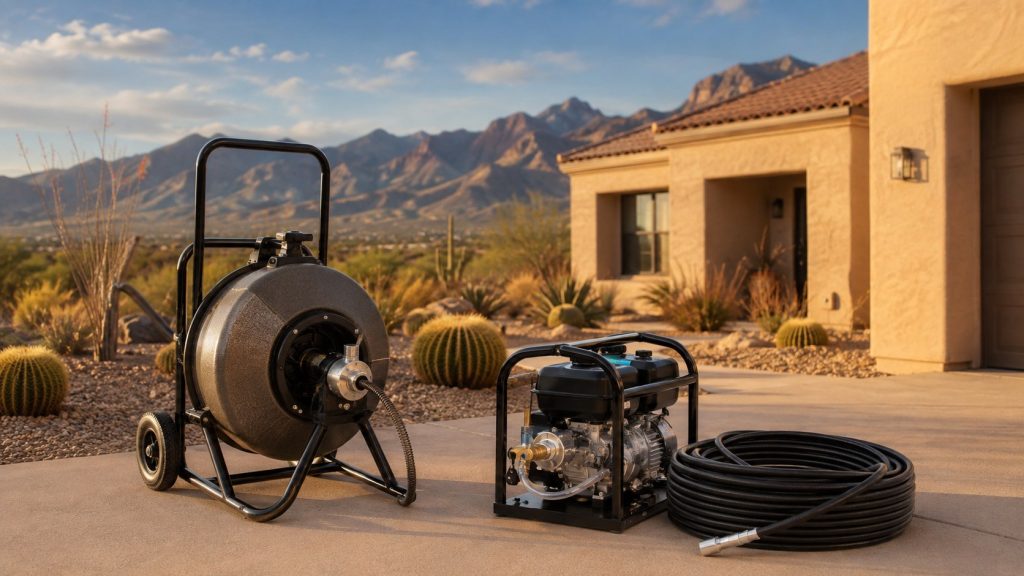
Hydro jetting sends water through a specialized nozzle at high pressure. Forward-facing jets cut through the blockage while rear-facing jets propel the hose down the line and scour the pipe wall as it travels.
The result is a pipe cleaned back toward its original diameter, not just opened. Grease is emulsified and flushed. Mineral scale is stripped. Sludge and settled grit are removed rather than pushed further along. Root hairs get cut back.
It also uses only water, which means no chemicals in your pipes or in the wastewater system. For a lot of Tucson homeowners, that matters.
Comparing the Two Side by Side
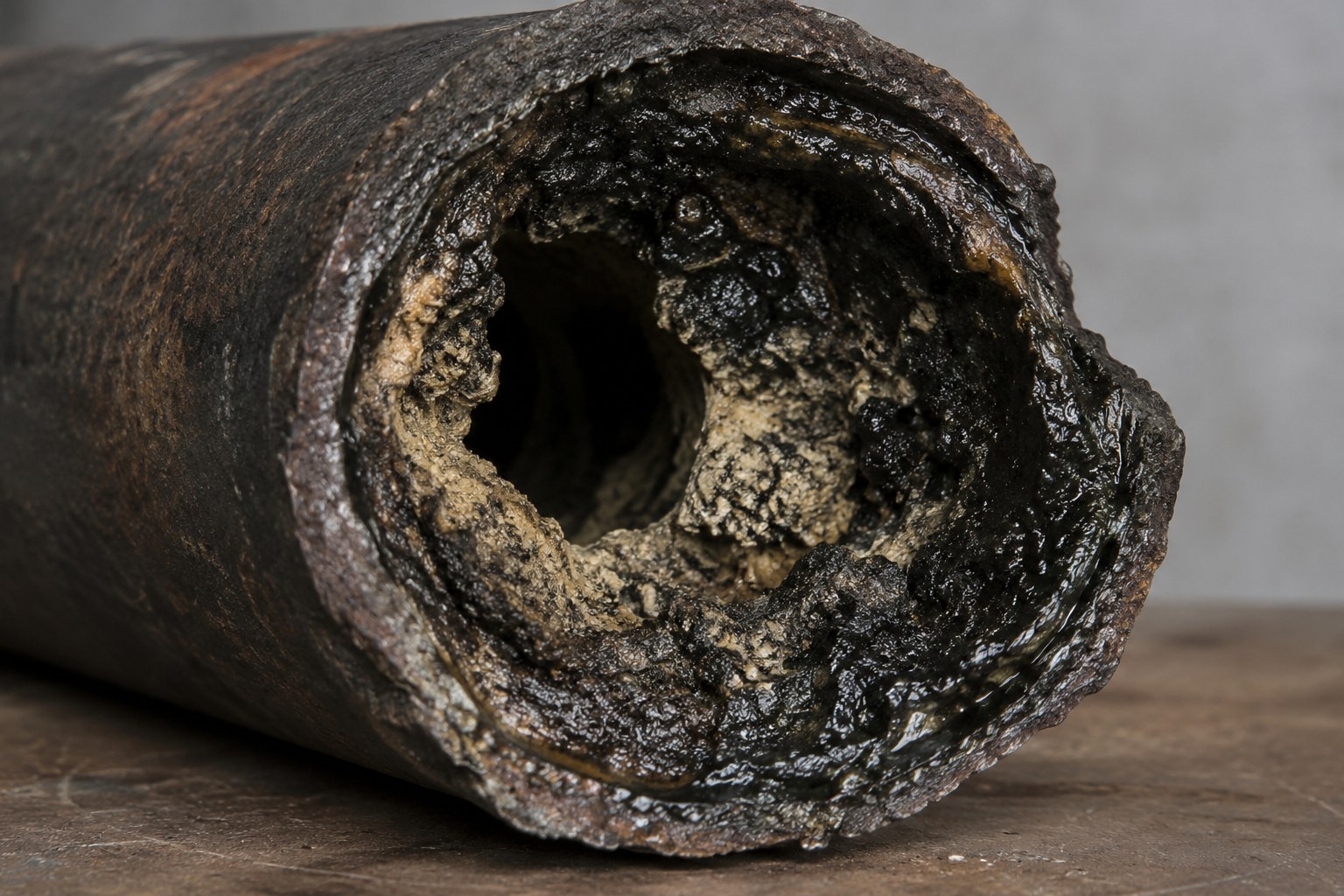
The best method depends on the material inside the line and the condition of the pipe. A snake uses mechanical contact at one point. It restores flow quickly when a solid object or compact obstruction blocks a short run. Hydro jetting sends controlled water through a nozzle selected for the pipe diameter and buildup. It reaches the full circumference and carries loosened material downstream.
- Choose snaking for an isolated fixture, a recently formed obstruction, or a line that needs a quick opening before further inspection.
- Choose hydro jetting for recurring kitchen grease, hard-water scale, storm silt, sludge, or fine roots coating a structurally sound line.
- Start with a camera inspection when more than one drain is affected, the clog keeps returning, or the age and material of the sewer lateral are uncertain.
Cost alone shouldn’t decide the method. A lower-priced service that restores only a narrow channel may cost more after repeat visits. Jetting also isn’t automatically the better value when a snake will remove one object completely. We match the tool to the evidence, then verify that normal flow has returned.
When We Recommend Each One
We reach for a snake when the problem is a single identifiable obstruction in an otherwise healthy line, when the affected run is short and the fixture is isolated, or when a fast clear is what the situation calls for and there’s no evidence of systemic buildup.
We recommend hydro jetting when the same drain has clogged more than once, when multiple fixtures are slowing together, when a kitchen line has years of grease in it, when storm debris has settled in a sewer lateral, or when a camera inspection shows the pipe wall is coated rather than blocked.
For most Tucson homes, the honest answer is that snaking handles the emergency and jetting handles the cause. Sometimes you need both, in that order.
When Hydro Jetting Is the Wrong Choice
This is the part that usually goes unmentioned, so we’ll say it plainly.
Hydro jetting is not appropriate for every pipe. On a line that’s already cracked, badly corroded, or structurally compromised, high-pressure water can make an existing problem worse. Older clay and deteriorated cast iron laterals both warrant caution.
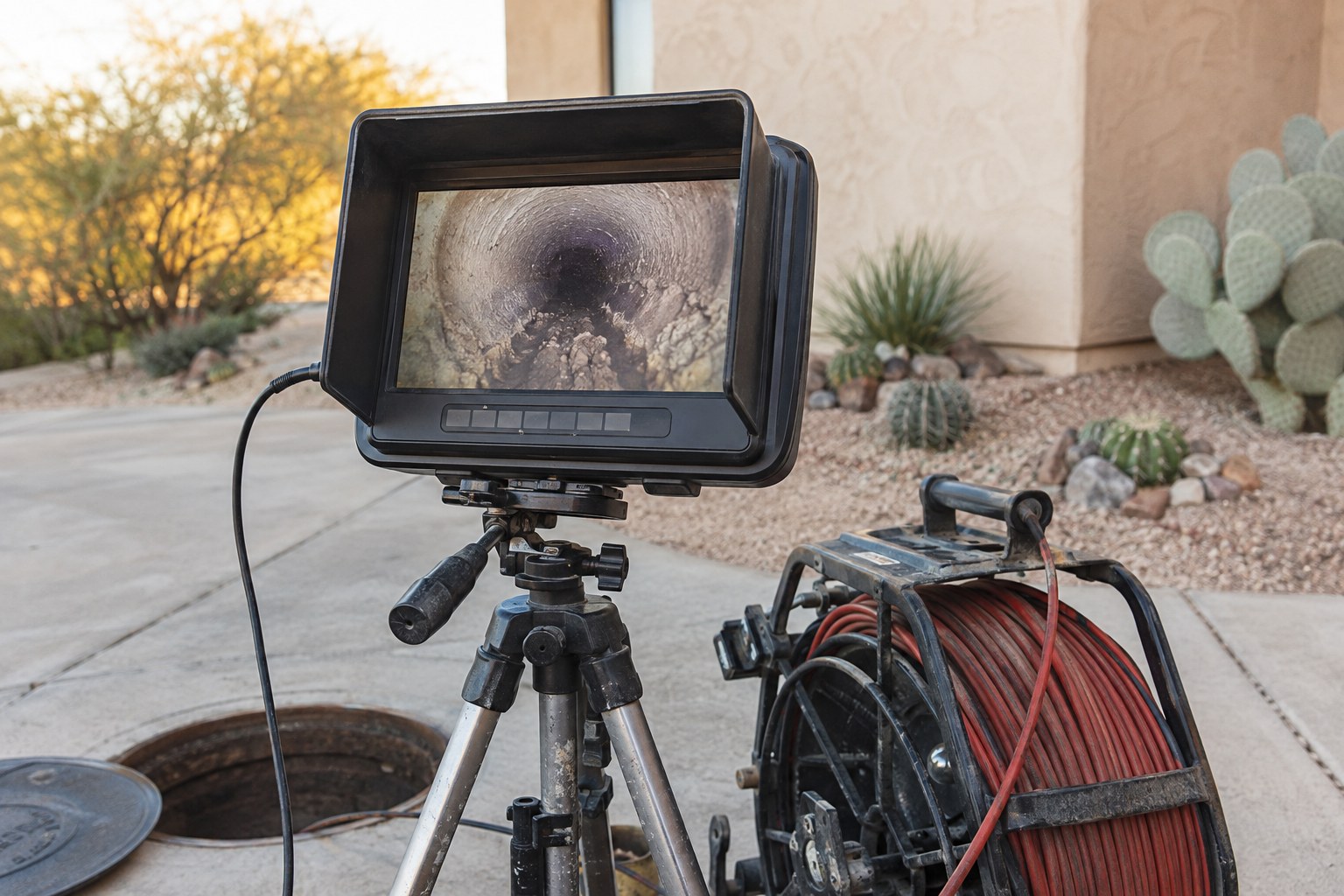
That’s why we camera the line first on any job where jetting is under consideration. If the footage shows a pipe that shouldn’t be jetted, we’ll tell you, show you why, and talk about sewer line repair instead. Recommending jetting on a pipe that can’t take it isn’t a service, it’s a future callback with your money attached.
Common Questions About Drain Cleaning
How often should a Tucson home need drain cleaning?
A home with no history of problems generally doesn’t need scheduled cleaning. Homes with older pipe, heavy kitchen use, or large trees near the sewer route benefit from periodic maintenance, and we’ll suggest an interval based on what the camera shows rather than a generic schedule.
Will store-bought drain cleaner work in the meantime?
We’d steer you away from it. Chemical cleaners often fail to clear the blockage while sitting in the line and attacking the pipe. They also make the job more hazardous for whoever opens the drain next.
Does hydro jetting damage healthy pipe?
No. On sound pipe it’s safe and thorough. The pressure and nozzle are matched to the pipe material and diameter. The camera inspection beforehand is what makes that judgment possible.
Can jetting clear tree roots permanently?
It clears them thoroughly, but roots grow back if the entry point remains. Jetting solves the blockage; addressing the crack or joint the roots came through is what solves the recurrence.
How long does a jetting job take?
A typical residential line is often a couple of hours including the camera inspection. Heavily built-up or unusually long runs take more.
Give Us A Call Today!
If a drain in your house has backed up more than once, the method matters. We’ll look at the line, show you what’s actually in it, and recommend the approach that fits the pipe rather than the one that sounds most impressive.
Call PlumbZona at (520) 392-4862 or book online. Take a look at our drain cleaning service for more on how we work, and our current specials before you schedule.